Tampilkan postingan dengan label Science. Tampilkan semua postingan

Senin, 12 Oktober 2015

Devon Greater Horseshoe Bat Project gets £707k of lottery funding

0 komentar

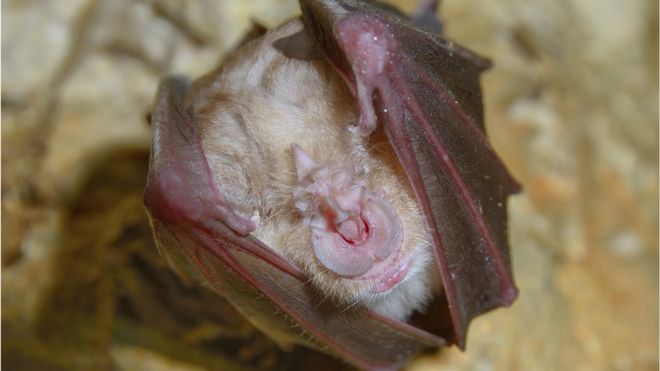
A project to help one of Europe's most endangered bat species has been awarded £707,000 of National Lottery funding.
The Devon Greater Horseshoe Bat Project will restore habitats, protect 11 "priority roosts" and work with landowners.
Devon is the species stronghold, with a third of the UK's 6,500 bats found in the county, project organisers have said.
Funding has come from the Heritage Lottery Fund.

'Population crash'

The project is being led by the Devon Wildlife Trust in partnership with 18 organisations and the funding will allow the scheme to continue for the next five years.
Ed Parr Ferris, project manager, said: "The greater horseshoe bat is a species that has seen its European population crash in the last 100 years, and has disappeared from more than half its British range.
"Cattle-grazed pastures, wildflower-rich meadows, hedges, woodland edges, orchards and streams all play a key part in the bat's complex lives.
"The project will work with local farmers and communities to improve and conserve these features, which will be to the benefit not only of greater horseshoe bats but also Devon's wealth of other wildlife and our treasured landscapes."
The species is one of the UK's biggest bats with a wingspan of almost 16in (40cm).


'Priority roosts'

  • The project will work with landowners and local people close to the most important sites for the bats
  • The areas include the Avon Valley, Berry Head, Branscombe, Bovey Tracey, the Tamar Valley, and Southleigh
  • The project's ultimate goal is to restore the landscapes the bats need to travel through and feed in around these priority roosts.

Chemistry Nobel: Lindahl, Modrich and Sancar win for DNA repair

0 komentar

The 2015 Nobel Prize in Chemistry has been awarded for discoveries in DNA repair.
Tomas Lindahl and Paul Modrich and Aziz Sancar were named as the winners on Wednesday morning at a news conference in Stockholm, Sweden.
Their work uncovered the mechanisms used by cells to repair damaged DNA - a fundamental process in living cells and important in cancer.
Prof Lindahl is Swedish, but has worked in the UK for more than three decades.
The prize money of eight million Swedish kronor (£634,000; $970,000) will be shared among the winners.
"It was a surprise. I know that over the years I've occasionally been considered for a prize, but so have hundreds of other people. I feel lucky and proud to be selected today," Tomas Lindahl, from the UK's Francis Crick Institute, told journalists.
Claes Gustafsson, from the Nobel Committee, said the recipients had "explained the processes at the molecular level that guard the integrity of our genomes".

Monitoring and repair

DNA is open to an onslaught of different phenomena that can generate defects in our genomes.
UV radiation and molecules known as free radicals can cause damage. Furthermore, defects can arise when DNA is copied during cell division - a process that occurs millions of times each day in our bodies.
"Cigarette smoke contains small reactive chemicals, which bind to the DNA and prevent it from being replicated properly - so they are mutagens. And once there is damage in the DNA this can cause diseases including cancer," said Prof Lindahl, who for 20 years ran the Clare Hall laboratories in Hertfordshire - now part of Cancer Research UK.
To address those defects, a host of molecular systems continuously monitor and de-bug our genetic information. The three new laureates mapped in detail how some of these mechanisms worked.

Minggu, 11 Oktober 2015

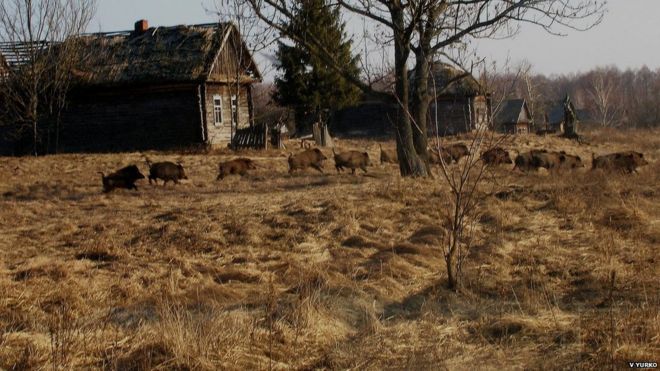
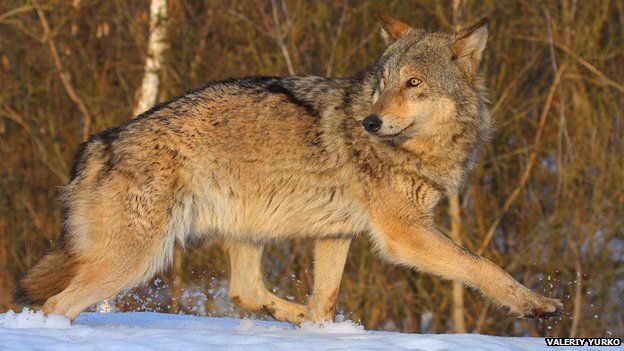
Wild mammals 'have returned' to Chernobyl

0 komentar

Removing humans from what is now the exclusion zone around the damaged Chernobyl nuclear reactor has allowed wildlife to return, researchers say.
They say a long-term census of mammals in the area has shown that wildlife numbers are likely to be "much higher than they were before the accident".
Professor Jim Smith of the University of Portsmouth led the study, published in the journal Current Biology.
He stressed that this "does not mean that radiation is good for wildlife".
"It's just that the effects of human habitation, including hunting, farming, and forestry, are a lot worse," Prof Smith said.
With the help of with colleagues from the Polesky State Radioecological Reserve in Belarus, the researchers examined data from aerial surveys that counted large mammals including roe deer, elk, wild boar and wolves.
They also carried out tracking studies in the winter - using footprints in snow to calculate the numbers of different mammal species. And measuring the levels of radioactive contamination in those tracks.
"The numbers of animals we see in Chernobyl is similar to the populations in uncontaminated nature reserves," Prof Smith said.
The number of wolves was particularly striking - up to seven times higher than in nearby nature reserves of a comparable size. Prof Smith attributed this to the lack of hunting in the exclusion zone.

A 30km exclusion zone now surrounds the infamous Chernobyl nuclear power plant. And Prof Smith says the picture from this study reveals what happens in terms of wildlife conservation "when you take humans out of the picture".
But, he said, the study did not look at the health effects of radiation on individual animals.
That is something that Prof Tim Mousseau from the University of South Carolina, has spent many years trying to unpick in his studies of wildlife - particularly bird populations - in the exclusion zone.
Prof Mousseau said the study was a "very positive move forward in conducting research concerning the potential health and environmental impacts of nuclear accidents".
"Much more research on this is desperately needed," he added.
But Prof Mousseau is also troubled by "the characterisation that Chernobyl and the surrounding area is teeming with wildlife".
"This study only applies to large mammals under hunting pressure, rather than the vast majority of animals - most birds, small mammals, and insects - that are not directly influenced by human habitation," he told BBC News.

New 'hog-nosed rat' discovered in Indonesia

0 komentar
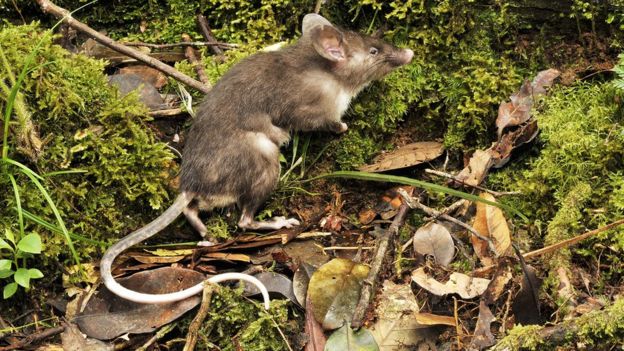
A team of scientists have discovered a new species of rat in Indonesia.
The species, which has been named Hyorhinomys stuempkei - hog-nosed rat - has "distinct and unique features uncommon to other rats", they said.
Five of the rodents were discovered on Sulawesi island earlier in January by researchers from Australia, Indonesia and the US.
Museum Victoria's mammal curator Kevin Rowe said the species was "previously undocumented".
"We were on a mission to survey remote mountains in the area and to put evolution in Asia and Australia into context," Mr Rowe said.
"Nothing is currently known about these rats and how widely they were distributed throughout the forests."


'Remarkable morphological evolution'

Mr Rowe, who specialises in rodent evolution, spent six weeks in Indonesia with other scientists and a group of locals trying to reach the remote forest area.
He also shared with the BBC the "exciting moment" of finding a hog-nosed rat.
"We had been setting up overnight traps for a few days - that was when I stumbled upon a completely new rat," he said.
"I hollered immediately for my colleagues as I knew it was a new species."
The rats appeared "healthy, with full stomachs", weighing at an estimated 250g.
Mr Rowe also added that there were rats on Sulawesi island similar to the newly discovered mammal, but they "weren't the same".

Neutrino 'flip' wins physics Nobel Prize

0 komentar

The discovery that neutrinos switch between different "flavours" has won the 2015 Nobel Prize in physics.
Neutrinos are ubiquitous subatomic particles with almost no mass and which rarely interact with anything else, making them very difficult to study.
Takaaki Kajita and Arthur McDonald led two teams which made key observations of the particles inside big underground instruments in Japan and Canada.
They were named on Tuesday morning at a news conference in Stockholm, Sweden.
Goran Hansson, secretary general of the Royal Swedish Academy of Sciences, which decides on the award, declared: "This year's prize is about changes of identity among some of the most abundant inhabitants of the Universe."
Telephoning Prof McDonald from the conference, he said: "Good morning again - I'm the guy who woke you up about 45 minutes ago."

Prof McDonald was in Canada, where he is a professor of particle physics at Queen's University in Kingston. He said hearing the news was "a very daunting experience".
"Fortunately, I have many colleagues as well, who share this prize with me," he added. "[It's] a tremendous amount of work that they have done to accomplish this measurement.
"We have been able to add to the world's knowledge at a very fundamental level."
Prof Kajita, from the University of Tokyo, described the win as "kind of unbelievable". He said he thought his work was important because it had contradicted previous assumptions.
"I think the significance is - clearly there is physics that is beyond the Standard Model."

Sabtu, 10 Oktober 2015

Cacti facing extinction, study warns

0 komentar

Almost one-third of cactus species are under threat as a result of over-harvesting and illegal trade in the plants, a global study has concluded.
Conservationists voiced concern, saying the level of threat to cacti was much greater than previously thought.
The plants are a vital component of arid ecosystems, providing a source of food and water for many animals.
The results of the assessment by the International Union for Conservation of Nature appear in Nature Plants journal.
According to the study, 31% of the world's 1,480 cactus species were under pressure from human activity, such as illegal trading, agriculture and aquaculture as well as land-use change.
"The results of this assessment come as a shock to us," said lead author Barbara Goettsch, co-chairwoman of the IUCN's Cactus and Succulent Plant Specialist Group.
"We did not expect cacti to be so highly threatened and for illegal trade to be such an important driver of their decline."
The assessment reported that the illegal trade of live plants and seeds for the horticultural industry and private collections, as well as their unsustainable harvesting, affected 47% of threatened species.
These plants which have evolved to cope with the harsh conditions found in arid landscapes are native to North and South America, with exception of one species that is native in southern Africa and South Asia.

Plant uses raindrops to eat ants

0 komentar

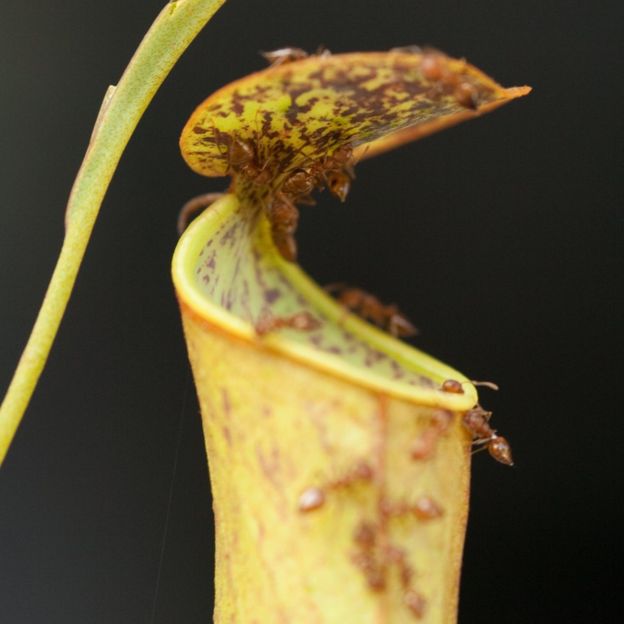
A carnivorous pitcher plant uses power from falling raindrops to fling ants to their doom, biologists have discovered.
The team, from the University of Bristol, found that raindrops kick off very fast vibrations in the lid of the plant's jug-shaped leaves.
This propels ants from the lid into the pitcher trap below, where they drown and are consumed by digestive juices.
The findings, published in the journal PNAS, are based on high-speed cameras and laser vibration measurements.
Using these instruments, Dr Ulrike Bauer and her colleagues recorded extremely fast movement in the lid of the pitcher leaf, after it was hit by a raindrop.
It wobbles like a stiff spring, she said.
"You have a raindrop hitting the surface and that causes it to move down, fast. Then because of this spring property, it moves to a certain point and springs back.
"You get an oscillation, very similar to when you put a ruler on the edge of your desk and flick the end down with your finger."


New moves

This movement is unique in the plant kingdom, Dr Bauer said - partly because of its speed, which easily outstrips the insect-trapping manoeuvres of other carnivorous plants, and partly because of the way it exploits an external energy source.
"Having a fast movement in a plant is unusual in itself," she explained, "but having a fast movement that doesn't require the plant to invest any energy - it just requires it to build the structure - that's something quite surprising."
The findings place the species in the study, Nepenthes gracilis, into its own carnivorous category; it belongs neither with "active" carnivorous plants, like flytraps, nor motionless "passive" insect eaters - like most other pitcher plants.
Key to the pitcher's rain-powered trap is the stiffness of its lid. When the team studied another species, which catches ants using only the slippery rim of its pitcher, they found it had a more bendy lid.

Minggu, 28 Juni 2015

It's showtime for Pluto; prepare to be amazed by NASA flyby

0 komentar
Pluto, reveal thyself, and Earthlings, enjoy the show.
On Tuesday, NASA's New Horizons spacecraft will sweep past Pluto and present the previously unexplored world in all its icy glory.
It promises to be the biggest planetary unveiling in a quarter-century. The curtain hasn't been pulled back like this since NASA's Voyager 2 shed light on Neptune in 1989.
Now it's little Pluto's turn to shine way out on the frigid fringes of our solar system.
New Horizons has traveled 3 billion miles over 9½ years to get to this historic point. The fastest spacecraft ever launched, it carries the most powerful suite of science instruments ever sent on a scouting and reconnaissance mission of a new, unfamiliar world.
Guarantees principal scientist Alan Stern, "We're going to knock your socks off."
The size of a baby grand piano, the spacecraft will come closest to Pluto on Tuesday morning — at 7:49 a.m. EDT. That's when New Horizons is predicted to pass within 7,767 miles of Pluto. Fourteen minutes later, the spacecraft will zoom within 17,931 miles of Charon, Pluto's jumbo moon.
For the plutophiles among us, it will be cause to celebrate, especially for those gathered at the operations center at Johns Hopkins University's Applied Physics Laboratory in Laurel, Maryland. The lab designed and built the spacecraft for NASA, and has been managing its roundabout route through the solar system.
"What NASA's doing with New Horizons is uprecedented in our time and probably something close to the last train to Clarksville, the last picture show, for a very, very long time," says Stern, a planetary scientist with the Southwest Research Institute in Boulder, Colorado.
It is the last stop in NASA's quest to explore every planet in our solar system, starting with Venus in 1962. And in a cosmic coincidence, the Pluto visit falls on the 50th anniversary of the first-ever flyby of Mars, by Mariner 4.
Yes, we all know Pluto is no longer an official planet, merely a dwarf, but it still enjoyed full planet status when New Horizons rocketed from Cape Canaveral, Florida, on Jan. 19, 2006. Pluto's demotion came just seven months later, a sore subject still for many.
"We're kind of running the anchor leg with Pluto to finish the relay," Stern says.
The sneak peeks of Pluto in recent weeks are getting "juicier and juicier," says Johns Hopkins project scientist Hal Weaver. "The science team is just drooling over these pictures."
The Hubble Space Telescope previously captured the best pictures of Pluto. If the pixelated blobs of pictures had been of Earth, though, not even the continents would have been visible.
The New Horizons team is turning "a point of light into a planet," Stern says.
An image released last week shows a copper-colored Pluto bearing, a large, bright spot in the shape of a heart.
Scientists expect image resolution to improve dramatically by Tuesday. The 7,767-mile span at closest approach is about the distance between Seattle and Sydney.
New Horizons, weighing less than 1,000 pounds including fuel, has seven instruments that will be going full force during the encounter. It's expected to collect 5,000 times as much data, for instance, as Mariner 4.
"We're going to rewrite the book," Weaver says. "This is it — this is our once-in-a-lifetime opportunity to see it."
The team gets one crack at this.
"We're trying to hit a very small box, relatively speaking," says Mark Holdridge, the encounter mission manager. "It's 60 by 90 miles, and we're going 30,000 mph, and we're trying to hit that box within a plus or minus 100 seconds."
The only planet in our solar system discovered by an American, Pluto actually is a mini solar system unto itself. Pluto — just two-thirds the size of our own moon — has big moon Charon that's just over half its size, as well as baby moons Styx, Nix, Hydra, Kerberos and Styx. The names are associated with the underworld in which the mythological god, Pluto, reigned. New Horizons will observe each known moon and keep a lookout for more.
Scientists involved in the $700 million effort want to get a good look at Pluto and Charon, and get a handle on their surfaces and chemical composition. They also plan to measure the temperature and pressure in Pluto's nitrogen-rich atmosphere and determine how much gas is escaping into space. Temperatures can plunge to nearly minus-400 degrees.
Bill McKinnon, a New Horizons team member from Washington University in St. Louis, Missouri, expects to see craters and possible volcanic remnants. A liquid ocean and a rocky core may lie beneath the icy shell.
"Anybody who thinks that when we go to Pluto, we're going to find cold, dead ice balls is in for a rude shock," McKinnon says. "I'm really hoping to see a very active and dynamic world."
Pluto has tantalized astronomers since its 1930 discovery by Clyde Tombaugh using the Lowell Observatory in Flagstaff, Arizona. Some of Tombaugh's ashes are aboard New Horizons. His two children, now in their 70s, plan to be at Johns Hopkins for the encounter.
With its tilted, elongated 248-year orbit, Pluto has made it only a third of the way around the sun since its discovery. The amount of sunlight that reaches Pluto is so dim that at high noon it looks like twilight here on Earth. The massive surrounding Kuiper Belt, in fact, is called the Twilight Zone. The New Horizons team has its eyes on a few much smaller objects in the Kuiper Belt, and is hoping for a mission extension as the spacecraft continues toward the solar system exit on the heels of NASA's Voyagers 1 and 2 and Pioneers 10 and 11.
For now, signals take 4½ hours to travel one-way between New Horizons and flight controllers in Maryland.

Sabtu, 27 Juni 2015

Earth is losing its bumblebees

0 komentar
Climate change is causing wild bumblebees to disappear from large swaths of their historical range, which could spell disaster for pollinating crops in Europe and North America, new research suggests.
As global temperatures have risen, bumblebees have disappeared from the warmest regions they occupy, but have not spread northward to take advantage of new habitat, the study finds.
"They just aren't colonizing new areas to track rapid, human-caused climate change," study co-author Jeremy Kerr, a biologist at the University of Ottawa, said at a news conference. [See Images of Amazing Bumblebees]
Superstar pollinators
Honeybees have made headlines in recent years because their numbers are plummeting in a mysterious process called colony collapse disorder. Scientists have proposed a range of contributing factors, from overuse of neonicotinoid pesticides that disorient the buzzing insects to the rise of bee parasites.
But bumblebees are the real superstars of the pollinating world. Unlike almost every other bee species, bumblebees are out in the fields, sipping nectar and pollinating plants from spring to late fall, said study co-author Laurence Packer, a biologist at York University in Toronto.
Most other bee species pollinate just a handful of plants. What's more, bumblebees have unique moves, such as the ability to "buzz pollinate" tricky flowers like tomatoes, said study co-author Alana Pindar, a biologist at the University of Ottawa.
Bumblebees are of great economic importance, with studies putting their fruit and flower pollinating worth at $3 billion a year.
Sharp decline
Kerr and his colleagues looked at historical records of the habitat ranges for 67 bumblebee populations in Europe and North America between 1901 and 1974, when climate warming was negligible, and between 1974 and 2010, when climate change accelerated. On its southern edge, the bees' range has shrunk 186 miles, or about 5.6 miles every year, Kerr said.
Yet despite warming in northern latitudes, bumblebees haven't figured out a way to take advantage of the now less-frigid northern climes. The study, which was published July 9 in the journal Science, did not show any correlation between land-use practices or pesticide use and bumblebee populations.
Bees are dying out in the southern end of their range because of the rise of extreme heat waves.
"If you imagine a car that starts running out of coolant and starts blowing steam out of the front of the hood, that's kind of like an analogy for what bumblebees do when it gets too hot," Kerr said.
But it's not clear why they haven't flown north to make up lost ground. Many stars need to align, from just the right flowers to the right winter shelter, for queens to produce new bees for the next season; so perhaps they simply can't reproduce fast enough for new colonies to take root, said study co-author, Sheila Coila from Wildlife Preservation Canada.

Jumat, 26 Juni 2015

Ancient exoplanets raise prospects of intelligent alien life

0 komentar
Can life survive for billions of years longer than the expected timeline on Earth? 
As scientists discover older and older solar systems, it's likely that before long we'll find an ancient planet in the habitable zone. Knowing if life is possible on this exoplanet would have immense implications for habitability and the development of ancient life, one researcher says.
In January, a group led by Tiago Campante — an astroseismology or "starquake" researcher at the University of Birmingham in the United Kingdom — announced the discovery of five tiny, likely rocky worlds close to an ancient star. The star is named Kepler-444 after NASA's planet-hunting Kepler mission, which first made a tentative discovery. [10 Exoplanets That Could Host Alien Life ]
Campante's contribution was narrowing down the age of Kepler-444 and its planets to an astounding 11.2 billion years old. That's nearly 2.5 times as old as our solar system. None of Kepler-444's planets are thought to be habitable, as they circle the star at a scorchingly close distance. However, Campante said that finding those planets is a great stride forward in the search for older, habitable worlds, and the best may be yet to come.
"This system gives us hope that there are other habitable worlds that we can’t detect because we don’t have enough observing timespan yet," Campante said. 
Upcoming observatories could change that, he added. Whether life can live for billions of years, however, is pure speculation. 
"If intelligent life develops in a system as old as this one, would it still exist or would they extinguish themselves?" Campante asked. 
Results from Campante's paper were published in January in The Astrophysical Journal, in a paper entitled, "An Ancient Extrasolar System with Five Sub-Earth-Size Planets."
 Surprise composition
The researchers observed Kepler-444 with the W.M. Keck telescope near the summit of Mauna Kea, Hawaii to learn more about its chemical composition.
The star is deficient in iron but is rich in what are called "alpha elements," such as silicon, carbon, nitrogen and oxygen. These elements were all formed in the first stellar explosions of our universe, when older stars ran out of fuel to burn and spread these elements far and wide. These elements make the composition of the star's orbiting planets a bit of a surprise, Campante said. 
Normally, scientists expect that "terrestrial" planets — rocky ones such as Mercury, Venus or Earth —  have lots of iron in their interiors. This discovery shows it's also possible to create planets that are primarily made of alpha elements, he said. This means that rocky planets may be able to form in multiple ways, making them more common across the universe.
The Kepler-444 system is not much like ours, though. Kepler-444 is slightly smaller than our sun, and its planets orbit extremely close in. The habitable zone in this system starts around 0.4 astronomical units (AU), or Earth-sun distances. Yet the outermost planet huddles at only 0.08 AU. That's roughly five times closer than Mercury is to our own sun.

Widening the search

Kamis, 25 Juni 2015

Mystery solved: Why large dinosaurs avoided the tropics for millions of years

0 komentar
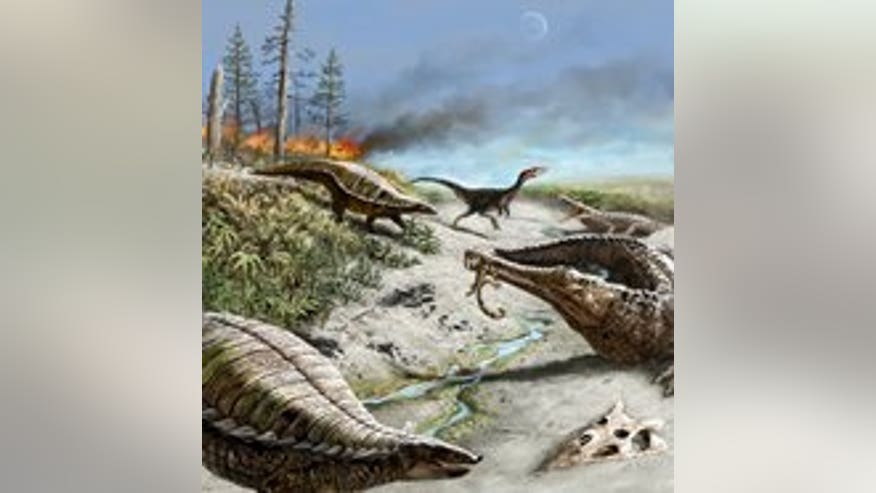
New research has revealed why it took more than 30 million years for large Triassic dinosaurs to populate the tropics after they first appeared on Earth, ending a mystery that has kept researchers baffled for decades. Using new geological evidence culled from Ghost Ranch, N.M., researchers from the University of Southampton in the U.K. have found that an extremely unpredictable hot and arid climate due to elevated carbon dioxide levels (four to six times of what they are today) kept large herbivorous dinos at bay until after 200 million years ago.
“For several decades, researchers have noticed a curious case: large plant eating dinosaurs seemed to be much more common at high latitudes during the Triassic,” Jessica Whiteside of the University’s National Oceanography Centre in Southampton told FoxNews.com. “However, it has only been in the past decade that we’ve realized they’re completely missing from the tropics, where only a few small carnivorous dinosaurs dwelled.”
According to Whiteside, researchers had suspected that climate had played a role, though no one had developed a detailed environmental record from the same sediments that also preserved extensive fossil vertebrate records (including small dinosaurs) – until now.  “Our major finding is that wild swings in climate and extremes of drought and intense heat have implications for survivability of Triassic vertebrates, including early dinosaurs.”
These “wild swings in climate” included raging wildfires that would sweep the dry landscape and continually reshape the vegetation that large plant-eating dinosaurs like BrachiosaurusDiplodocus, and Brontosaurus would have fed on. These fires occurred every few dozen years and would reach temperatures up to 1112 degrees Fahrenheit. While these conditions suited smaller carnivorous dinosaurs such as Coelophysis just fine, the larger plant eaters decided to temporarily forgo equatorial areas for the higher latitudes.
“The large, plant-eating forms (the long-necked sauropodomorphs, predecessors of the giant Jurassic sauropods) are found from Late Triassic age sites in Europe, South America (Brazil and Argentina), South Africa, and the polar regions,” Whiteside said. “Essentially everywhere from the same time period except the tropics.”
The team culled their evidence from an area that’s no stranger to hot and arid climates– Ghost Ranch, N.M.  The scenic 21,000–acre retreat – famous as the place where artist Georgia O’Keefe painted for most of her career –  was located close to the equator 205-215 million years ago at 12 degrees North (it lies at 36 degrees North today).

Rabu, 24 Juni 2015

Mysterious inscription from the time of King David offers glimpse into the past

0 komentar
A mysterious inscription from the time of King David provides a fascinating glimpse into the past, the Israel Antiquities Authority announced on Tuesday.
The inscription was discovered at Khirbet Qeiyafa, in the valley of Elah southwest of Jerusalem. A ceramic jar around 3,000 years old that was broken into numerous shards was discovered in 2012. Researchers were fascinated by letters written in Canaanite script that could be seen on a number of the shards.
Extensive restoration work was conducted in the laboratories of the Israel Antiquities Authority Artifacts Treatment Department, during which hundreds of pottery shards were glued together to form a whole jar. Researchers then discovered the inscription “Eshba’al Ben Beda’.”
The inscription suggests that Eshba’al Ben Beda was an important person. Ben Beda was apparently the owner of a large agricultural estate, according to the Israel Antiquities Authority, which says that produce from the estate was packed and transported in jars that bore his name. “This is clear evidence of social stratification and the creation of an established economic class that occurred at the time of the formation of the Kingdom of Judah,” it said, in a statement.
The name Eshba’al was reminiscent of the Canaanite storm god Ba’al, according to researchers, and the inscription marks a unique find in Israel.
“This is the first time that the name Eshbaʽal has appeared on an ancient inscription in the country,” said Professor Yosef Garfinkel of the Hebrew University of Jerusalem and Saar Ganor of the Israel Antiquities Authority, in the statement. “It is interesting to note that the name Eshbaʽal appears in the Bible, and now also in the archaeological record, only during the reign of King David.”